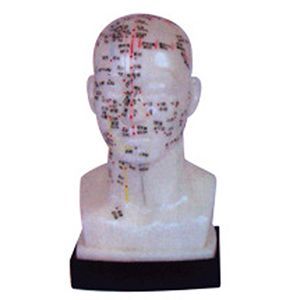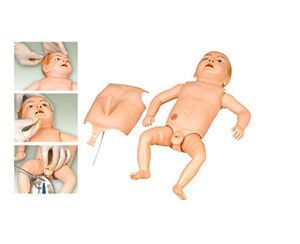
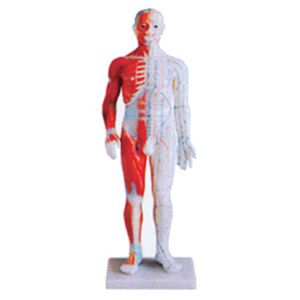
The standard anatomical acupuncture model is an important teaching aid for the teaching and practical training of traditional Chinese acupuncture, and is widely used in traditional Chinese medicine colleges and universities, acupuncture training, and scientific research and teaching. This model is designed based on the standard anatomical structure of the human body, accurately marking the direction of meridians and the positions of major acupoints. It can truly reproduce the distribution of acupoints and anatomical relationships in the human body, providing learners with an intuitive learning experience.
By conducting acupuncture simulation training through models, students can clearly understand the positioning methods of acupoints and their relative positions on the body, master the direction, Angle and depth requirements of acupuncture, and avoid blindness and errors in clinical practice. Meanwhile, the surface material of the model is highly realistic and can be repeatedly subjected to needling operations, enhancing the practicality and safety of learning.
In addition, the standard anatomical acupuncture model can also help learners establish a systematic cognitive framework of meridians and acupoints, enhance their spatial sense and acupoint discrimination ability, and lay a solid foundation for subsequent clinical acupuncture treatment. Its intuitiveness and repeatability have greatly enhanced teaching efficiency and serve as an important bridge connecting theory with practice.